National Trust logo

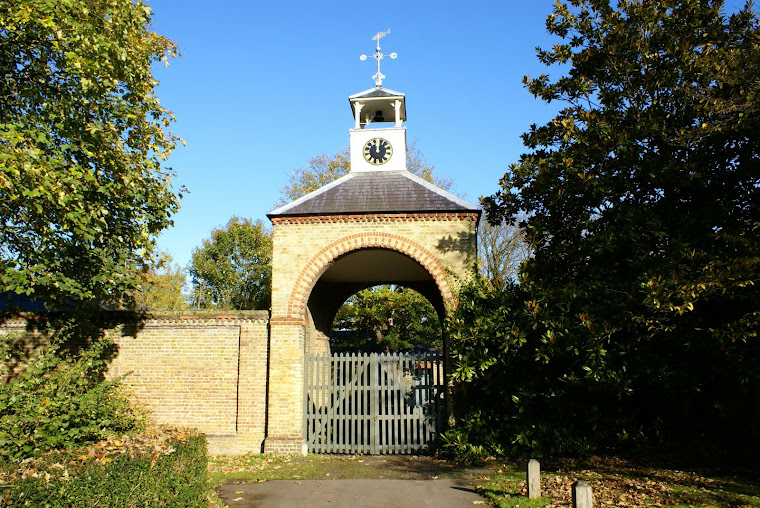
The 19th century stable yard

The 19th century stable yard
NTPL Zoë Colbeck

Wednesday, 19 September 2012

Clocks, carriages and cheese

So we're still eagerly anticipating the turning of the turbine, but in the meantime there's always something new happening in the stable yard.

Today we finally got the stable yard clock working, after a year of getting used to it always being 11.13. There are only two people in the country who have the skills to get it working - it was disconnected for the construction works - so finally one of them was able to come here. Now visitors can stop asking why it's not working and enjoys the chimes instead.

The clock finally says 11.43 instead of 11.13 (NTPL/Caroline Pankhurst)

The clock man from Cumbria climbs up to the clock with his head torch on (NTPL/Caroline Pankhurst)

There's a new attraction in the middle of the stable yard too - one of the original carriages has been painted and put back in the yard. Nick, our Parks & Gardens Manager, cleverly made some planters out of an old wooden bridge, to go next to the carriage, so they're full of flowers which set it off nicely.

The carriage and flowers in front of the solar slates (NTPL/Caroline Pankhurst)

Visitors enjoy a coffee with the new carriage and flowers (NTPL/Caroline Pankhurst)

Finally, if you haven't been here on a Saturday recently, you might not know that we have a farmers' market here each week - so next time you want some nice fruit, bread, fish, cheese etc, then you know where to come. It's every Saturday from 10-3.

 Visitors enjoy the new farmers' market (NTPL/Caroline Pankhurst)

Friday, 31 August 2012

The turning of the Screw

So London's first Archimedes Screw turbine is nearly complete!

The wall keeping the river out of the site has been broken down, so that the water can finally flow through it.


Breaking the wall down between the River Wandle and the Screw (NTPL/Caroline Pankhurst)

Then was lots of technical activity in the generator housing, then we had an exciting moment of the Screw being turned on to test it. This is a picture of it turning (we've also got a video but we won't share that just yet - let's wait for it to be turning properly....).

The Screw turns for the first time (NTPL/Caroline Pankhurst)

One of the screens in the generator housing (NTPL/Caroline Pankhurst)

The wooden capping was then fixed on top of the piles, an aluminium roof has been added to the generator housing and handrails have been installed so that visitors can look over it safely:

The wooden capping is laid on top of the piles (NTPL/Caroline Pankhurst)

The generator housing (beach hut) gets a shiny new roof (NTPL/Caroline Pankhurst)

The handrails around the Screw (NTPL/Caroline Pankhurst)

So it's almost ready, but those of you with very good memories will know that it was supposed to be turned on and generating electricity yesterday.....the only problem is that the safety cover to go over it isn't quite finished, so we need to wait to get that first. Hopefully it will come next week and we'll have a turning turbine then.


 The Screw waiting in the sunshine for its new cover (NTPL/Caroline Pankhurst)

If you want to be one of the first to see it turning, come for a tour on Open House Weekend, 22-23 September.

Tuesday, 21 August 2012

And it's goodbye from me...

...me being Zoë Adams, the Community Projects Manager for the project. My job involved setting up the Livinggreen exhibition centre, writing the exhibitions and the guidebook, running various events and activities and recruiting the volunteers. The funded part of the project is coming to an end, so I'm off to pastures new (namely the Natural History Museum in London).

Well, the last two years have flown by, and what a transformation it's been! I can remember arriving on my first day back in August 2010, looking at the project plan and wondering how we'd manage to do everything that we had set out to do.

It's hard to believe that the exhibition used to look like this! (c) NTPL

Looking at it today though, I think we've done a pretty good job. As I write, I can hear people outside enjoying the stable yard - we've had more than 24,000 visitors so far which is a great achievement.

What a tranformation! (c) NTPL / Louis Sinclair

Here are a few memories...

Best moment...
Has to be when the stable yard opened to the public for the first time. Watching the ribbon being cut and welcoming visitors to something that we'd worked so hard to create was pretty special. I've also enjoyed watching the volunteers grow as a team and make the project their own.


The Greensleeves Morris Men dancing at the grand opening. (c) NTPL

Worst moment...
Probably the day before the opening! Also the morning of the opening when I arrived to find that my first temporary exhibition had fallen down over night.
What I'll miss most...
Caroline (Project Coordinator) and the volunteers. We've worked hard, laughed a lot and enjoyed a few too many custard tarts along the way. The team here are fantastic and I'm sure that the Livinggreen Centre will continue to be a roaring success. I've also enjoyed the stable yard ice cream parlour a little too much in the hot weather.

So, all that's left for me to say is goodbye, thank you for reading, and wish good and green luck to Morden Hall Park for the future!

Monday, 13 August 2012

Turbine gets a beach hut

There are only a couple of weeks to go now until the turbine is finished, so it's just getting its final touches, including the fish and eel passes and housing for the turbine generator - which I think looks like a nice little beach hut...

This is Dave, from Mackleys, looking a little apprehensive when it arrived flat packed:

Dave contemplating building the shed (NTPL/Caroline Pankhurst)

But in no time at all the little shed was built over the generator turbine.

The generator housing (NTPL/Caroline Pankhurst)

The electricity to the whole stable yard was cut off for a few hours while the electricians wired the turbine up to the meters in the stable yard plant room. This means that we'll be able to see how much electricity it's generating, not just on the meter but also on our energy read-outs screen in the lobby (where visitors can also see how much power is coming from the solar panels and other sources too).

Mike from G A Electrical sorts out the electrics in the shed (NTPL/Caroline Pankhurst)

The energy read-outs screen (and cable drum rocking chairs) in the stable yard lobby
(NTPL/Caroline Pankhurst)

The fish and eel passes are also complete, the black one for the fish and the green brushy one for the eels:

The green eel pass and the black fish pass (NTPL/Caroline Pankhurst)

It won't be too long now till the Screw is turning and the fish and eels are swimming happily past it.
  
 The latest view of the whole site (NTPL/Caroline Pankhurst)

Tuesday, 31 July 2012

Turbine Taster

Our Archimedes Screw turbine is now well on its way to completion. If you missed the Guardian's coverage of the Screw's arrival a couple of weeks ago, see their article here:

Our ‘Turbine Taster’ evening last Thursday was a great success - it was our most popular Taster Day ever, with 30 participants from the local community and beyond. After some nice cheese and wine, people were able to hear more about the Archimedes Screw technology, see photos of each stage of the site construction, hear how the old mills used to work (like our historic Snuff Mill), see the 9,000 year old skull found on the site, see how the fish and eel passes will work and hear about how the project is helping the National Trust meet the aims of its Energy Strategy.

Henry Reily-Collins from Hallidays Hydropower explains how the Screw works (NTPL/Caroline Pankhurst)

 Dave Craddock from Mackleys shows photos from each stage of the construction (NTPL/Caroline Pankhurst)

The brushes to be fitted into the eel pass - shown by Paul Smith of Aquatic Engineering Control
 (NTPL/Caroline Pankhurst)

The historic waterwheel at Morden Hall Park - as talked about by Dave Saxby of
Museum of London Archaeology (NTPL/Caroline Pankhurst)

The evening concluded with a very exciting tour of the site, in the sunshine.  

Visitors are excited to get on to the site - it's the first time it's been open to the public
 (NTPL/Caroline Pankhurst)

Dave from Mackleys discusses the turbine with Jonathan Lewis from Merton Council's
Environment & Regeneration Team (NTPL/Caroline Pankhurst)

It's good to have Sarah Tebbot (now Morris!), ex Project Coordinator, and Nancy Falloon, ex Livinggreen Volunteer, back to see the latest developments (NTPL/Caroline Pankhurst)

The fish and eel pass equipment laid out for people to see (NTPL/Caroline Pankhurst)
.  
Everyone's now looking forward to seeing the turbine finished and turning, soon after its completion on 30 August.  

Wednesday, 25 July 2012

Green roof ready for bikes and bees

The living green roof on our new cycle shed is finally in place and looking beautiful!

As well as the turbine excitement last week, we also spent two days installing the green roof. John Little, who ran the workshop here in May, came back to do it, with Rob and Dave who help him as part of the Grass Roof Company (www.grassroofcompany.co.uk).

First of all Gareth, from Stennett Landscapes, finished building the shed, as John was starting work on the roof - it was quite a busy site:

Gareth and John both work on the shed (NTPL/Caroline Pankhurst)

John, Dave and Rob then got to work properly on the roof, adding three waterproof and protective layers to make sure that it doesn't leak:

John carries the waterproofing on to the shed (NTPL/Caroline Pankhurst)

John, Rob and Dave lay out the waterproofing (NTPL/Caroline Pankhurst)

They added a gabion edge and then cut the waterproofing to size:

John adds the gabion edge (NTPL/Caroline Pankhurst)

The layers are cut to size (NTPL/Caroline Pankhurst)

Dave fixes it all in place with strips of recycled plastic (NTPL/Caroline Pankhurst)

Drainage was then added, to take away excess water from the roof:

Rob and Dave measure up for the drainpipe (NTPL/Caroline Pankhurst)

Rob cuts the drainpipe (NTPL/Caroline Pankhurst)

They added little logs from John's garden, to make the edge look nice:

Dave with the gabion edge (NTPL/Caroline Pankhurst)

They then added lots of substrate - we designed the shed so that we could have deep soil and therefore a variety of plants - we allowed for 250kg per square metre. That means lots of buckets of soil being heaved up on to the roof.
  
 
 Rob and John pass each other buckets of soil to cover the roof (NTPL/Caroline Pankhurst)

A 'leaky pipe' was then fixed to the top of the shed and buried underneath the soil in big loops. This means that when we need to water the roof in very dry weather, we just need to attach a hose to the end of the porous pipe, and water will leak out underneath the plants.
 
 The leaky pipe is attached to the corner of the roof (NTPL/Caroline Pankhurst)

 
Dave, John and Rob all hold the pipe down and bury it under the soil (NTPL/Caroline Pankhurst)

Next it was time for the most exciting part - the planting. I joined in, as did Justin and Annie, our two garden volunteers who came to our green roof workshop recently.

First of all we planted some plug plants, all chosen for their suitability on green roofs. They included flowers which attract bees, such as ox-eye daisy and red valerian, and edible and aromatic herbs such as chives, thyme, rosemary and oregano.

Justin and Annie plant the plug plants (NTPL/Caroline Pankhurst)

We then went to the garden centre in Morden Hall Park to buy some more established plants, such as hyssop, delosperma, drosanthemum and various types of sedum.

We enjoy filling a trolley at the garden centre (NTPL/Caroline Pankhurst)

The plants were passed up to John on the roof, then we climbed up and planted them (cunningly taking photos of them with their labels, so we know what we're looking at later):


 The plants are lifted up and photos taken (NTPL/Caroline Pankhurst)

A hard day's planting was almost complete and we could admire our handiwork:

Justin, Annie and John pose on the new roof (NTPL/Caroline Pankhurst)

We just needed to add a bit more to encourage wildlife - a pile of stones at one end of the roof and two 'insect hotels' for solitary bees on the sunny end:

Caroline with the wildlife habitat pile of stones (NTPL/John Little)

The insect hotels made from recycled drain pipe and local wood (NTPL/Caroline Pankhurst)

We then watered the roof, using a hose attached to the leaky pipe:

Justin and Annie water the roof (NTPL/Caroline Pankhurst)

 The cycle shed is then complete, and ready to welcome the park's bikes and bees:

The finished cycle shed (NTPL/Caroline Pankhurst)