National Trust logo

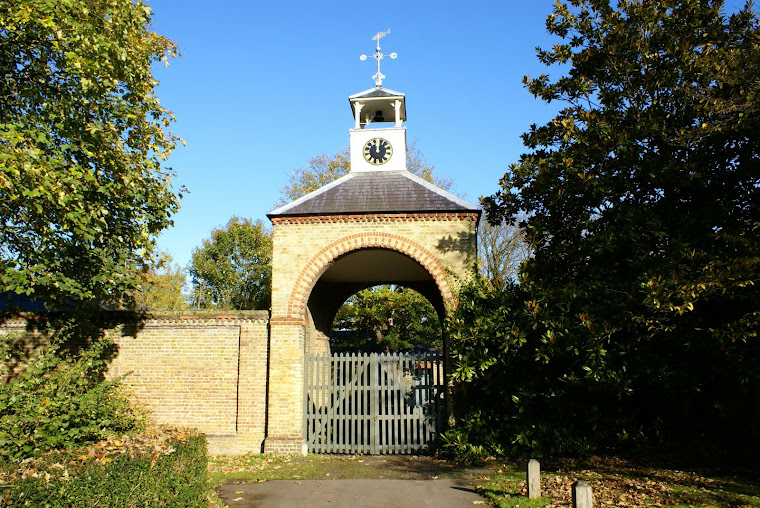
The 19th century stable yard

The 19th century stable yard
NTPL Zoƫ Colbeck

Friday, 6 July 2012

Launch of 'Livinggreen Guides'

Lots of visitors to our Livinggreen Exhibition ask us for more details about the technologies and materials they're seeing - how they work, how much they cost, the difference beween various types etc.

This is why we've just launched a series of 7 'Livinggreen Guides' - fact sheets about the following:

  • Solar panels
  • Solar glazing
  • Under floor heating
  • Wood burning stoves
  • Air source heat pumps
  • Lime plaster
  • Insulation
Two of the Livinggreen Guides (NTPL/Caroline Pankhurst)

The Guides, ranging from 2-6 pages, are available in our Livinggreen Exhibition and are also free on our website - take a look here if you want to find out more:


We hope that you like them!

Wednesday, 27 June 2012

Stable yard wins Green Apple Award!

The Morden Hall Park stable yard has just won another award - in the 2012 Green Apple Built Environment and Architectural Heritage Awards.

We won the Silver Award for Best Small Retrofit and picked up the award at a ceremony at the East Wintergardens, Canary Wharf, on Monday 25 June.  

                                Representatives of National Trust and Crofton pick up the award (NTPL) 
The Green Apple Awards are hailed as Europe’s longest running environmental awards.  The Built Environment and Architectural Heritage Awards are the leading international awards honoring excellence in sustainable construction, design and innovation of products and architectural preservation. The Awards recognise and reward best practice in both the private and public sectors. The 16th Annual Green Apple Awards received nearly 150 entries from Britain and around the globe.  

The Green Apple has been awarded to Morden Hall Park only a month after the stable yard received the prestigious Royal Institution of Chartered Surveyors (RICS) London Award for Design & Innovation.

Congratulations to all involved!

Wednesday, 20 June 2012

More Hydro Highlights

Work on our Archimedes Screw turbine continues well and is still on schedule to be finished at the end of August.

The site is really starting to take shape now and it is clear to see where the Archimedes Screw, the fish pass and the eel pass will be situated.

After the site was excavated and a concrete base was laid, the formwork was prepared in the section which will have the Screw in it:

 Formwork being prepared (NTPL/Caroline Pankhurst)
 
Concrete was then poured on top:

Concrete being poured (NTPL/Caroline Pankhurst)

The steel sheet piles were then cut down to size:

Cutting sheet piles (NTPL/Caroline Pankhurst)

More concrete was poured to form the wall dividing the Screw and the fish/eel passes - in this picture, the eel pass is on the far left, the fish pass next to it, and the Screw in the large area on the right:

The site with the fish/eel passes on the left (NTPL/Caroline Pankhurst)

More concrete was then lowered into the site to be poured carefully into the smaller areas:

Concrete being lowered (NTPL/Caroline Pankhurst)

Meanwhile, after the fish and eels had been moved safely downstream in the side channel, a sandbag wall was created at the end of the channel:

Sandbag wall (NTPL/Caroline Pankhurst)

Then a 'sweetening flow' (notch) was cut in the concrete wall to let the water back into the side channel. 
      Cutting the sweetening flow (NTPL/Caroline Pankhurst)

If you'd like to be among the first to see the Archimedes Screw in place, and find out more about how it will work, look out for more details soon about our 'Turbine Taster' evening on Thursday 26 July.

Friday, 8 June 2012

Livinggreen the Dutch and Belgian way

Amidst turbine and cycle shed developments I popped over to Belgium and the Netherlands for a few days (by train, naturally), to meet up with our European project partners and to see what they're doing in Antwerp and Delft.

EcoHouse Antwerp was the first of our five centres to be finished and is the place in Antwerp for visitors to find out everything to do with sustainable construction, housing and sustainable living. An abandoned, industrial warehouse in the city centre was renovated into a lively information centre, similar to our Livinggreen Exhibition at Morden Hall Park. A few of the things I liked particularly were their water bottle exhibit which lights up to show people how much water is used in flushing a toilet etc, their imaginative display of unusual objects in which to grow food and their green roof (of course!)

Interactive exhibit showing water use, Eco-House Antwerp (NTPL/Caroline Pankhurst)

Growing plants in violins, hot water bottles, detergent bottles etc,
Eco-House Antwerp (NTPL/Caroline Pankhurst)

The green roof at Eco-House Antwerp (NTPL/Caroline Pankhurst)

I was also impressed by their local church, visible from their roof - the whole roof is covered in solar panels:
 The local church covered in solar panels, Eco-House Antwerp (NTPL/Caroline Pankhurst)
I then went on to Delft for our meeting at the White Rose Mansion, a listed building situated along the town's most important canal. As part of the Livinggreen Project, the mansion is being renovated using intelligent building technology (to ensure efficient energy and water use), environmentally friendly materials, PV-cells enclosed in a glass roof and some amazingly shiny wall heating:

PV-cells in the glass roof of the White Rose Mansion (NTPL/Caroline Pankhurst)

Wall heating at the White Rose Mansion (NTPL/Caroline Pankhurst)

The Delft canal on which the White Rose Mansion is situated (NTPL/Caroline Pankhurst)

And as always when I go to the Netherlands, I never cease to be amazed by the number of bikes outside each station - so many that each part of the cycle park needs to be labelled - I liked the Vermeer one here in Delft:

Cycle park (or a small part of it), Delft station (NTPL/Caroline Pankhurst)

All partners in the Livinggreen Project continue to learn from each other (we're also working with France and Germany) and we're currently working on some joint publications for both home owners and organisations to learn from our experiences.

For more information on the project, see www.livinggreen.eu. 

Tuesday, 29 May 2012

Green roofs come to Morden!

Close followers of our blog may remember my excitement attending RESET's workshop on living green roofs back in October and my plan to create a bike shed with a green roof here at Morden Hall Park. Well things are finally coming together, with my bike shed nearly built and RESET running a green roof workshop here this weekend!

Around 30 people took part in the workshop, including a lot of students from the Centre for Alternative Technology (CAT) in Wales and four Livinggreen and gardening volunteers from Morden Hall Park.

Dusty Gedge and John Little started the workshop in the park's historic Snuff Mill, sharing their huge amount of experience from the many green roofs they've built.  

Dusty Gedge gives an introduction to green roofs (NTPL/Caroline Pankhurst)

Everyone then headed out into the sunshine, next to the site of the new bike shed, to make their own section of green roof. People enjoyed seeing the structure of the new shed, with its roof specially designed to take the weight of a good green roof.

Getting ready to build roofs - next to the bike shed with its air source heat pump (NTPL/Caroline Pankhurst)

Having 30 people with drills and lots of bits of wood could have been complete chaos, but somehow John and Dusty managed to keep things under control.
30 people start drilling (NTPL/Caroline Pankhurst)

Morden Hall Park Garden Volunteers, Justin and Annie, get some advice from John (NTPL/Caroline Pankhurst)  

Livinggreen Volunteer, Curt, looks like he's having fun (NTPL/Caroline Pankhurst)

John holds up a finished roof section so people know what they're aiming for (NTPL/Caroline Pankhurst)

We finished off inside again, learning more about construction and planting, then I gave people a tour of the newly renovated stable yard - showing how our new green roof will fit into the other examples of sustainable renovation being demonstrated. People seemed impressed with both the stable yard and the hydroelectric turbine developments.

Participants then proudly took their green roof section home - bike travel and going to the pub didn't prove to be serious obstacles, some even using their roof to make new friends....

Now we just need to finish building our shed before John Little kindly comes back to help us with the green roof.

If you missed this course and would like to do a similar one, RESET hold them frequently - the next one is on 23 June - see http://www.reset-development.org/. For more information on green roofs generally, see http://www.livingroofs.org/. And if you'd like John's company to build you a roof, see http://www.grassroofcompany.co.uk/!

Thursday, 24 May 2012

A big hole and some fishing

The site of the new turbine is changing daily. The area of ground contained by the piles has now been excavated, with more exciting archaeological finds - including what we think is a 9,000 year old cow skull (more on that soon!).

The site for the turbine is excavated (NTPL/Caroline Pankhurst)

Once the excavations were complete, a concrete foundation was laid.

The concrete foundation (NTPL/Caroline Pankhurst)

Work then began to move the fish and eels from the side channel, so that the water level could be lowered - they were safely taken out and carefully released back into the river a little way downstream.

An eel about to be released (NTPL/Caroline Pankhurst)

 
The fish and eel are released back into the River Wandle (NTPL/Caroline Pankhurst)

Friday, 18 May 2012

Piles of piles make way for the turbine

The first major stage of the Archimedes Screw turbine installation has now been completed: the piling.

Huge metal piles, each 6 metres long, have been hammered into the ground behind the Snuff Mill, using gentle vibrations to minimise disturbance to the historic buildings nearby. The piles will form a temporary wall around the turbine site, to allow construction to take place without water coming in from the river.


Carrying piles on to the site (Mackley Construction)


  The hydraulic 'jaw" holds a pile in place (Mackley Construction)


One of the piles is hammered in (Mackley Construction)
   
 The completed piling (Mackley Construction)

The site with piles in place - from the Snuff Mill window (NTPL/Caroline Pankhurst)

The piles will be left in place but cut off below ground level, once the work is complete.